


Brand & Product Security
Latest News
Advertisement
Latest Videos
Podcasts

Advertisement
More News

Vikram Anand explains how connected pharmacovigilance systems improve HCP and patient experiences, and why predictive, AI-driven intake is the next frontier for manufacturers.

EVERSANA's Vikram Anand explains how disconnected PV systems and manual safety processes can create commercial delays after FDA approval.

AI-enabled pharmacovigilance is becoming a commercial capability that protects product value and speeds evidence-based market access decisions.

EVERSANA's Vikram Anand breaks down FDA data on complete response letters, showing how gaps in pharmacovigilance and safety readiness, not manufacturing alone, drive costly delays in drug commercialization.
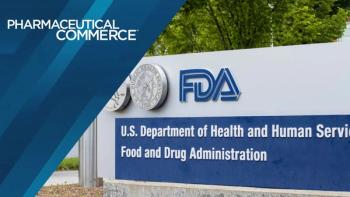
FDA is evaluating small pharmacies' package-level tracing capabilities while extending certain Drug Supply Chain Security Act exemptions to those dispensers through November 2027.

Serialization data does more than meet DSCSA rules. See how connected event histories improve recalls, returns and inventory visibility.
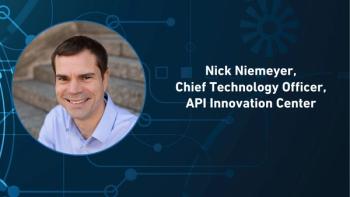
Nick Niemeyer of API Innovation Center on how the National Fragility Index could help reduce US drug shortage risk.
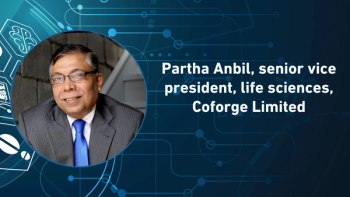
AI-powered automation is transforming pharmacovigilance, cutting AE case intake time amid record FAERS volumes and new FDA/EMA regulatory guidance.
In this week's Pharma Pulse, USP's annual shortages report reveals a sharp rise in drug discontinuations, J&J and Roche commit billions to protein degrader platforms, and more.

The US DSCSA requires digital drug traceability to ensure patient safety, but supply chains face data errors; deploying AI adds an intelligent compliance layer to automate process tracking and protect drug access.

Identiv's ID-Safe portfolio expands NFC authentication and tamper detection to secure pharmaceutical supply chains against counterfeiting and fraud.
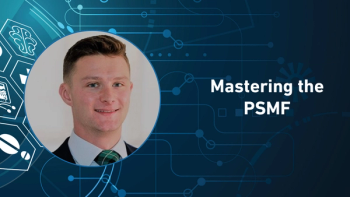
Mastering the PSMF is critical for inspection readiness, as it provides regulators an early look at your pharmacovigilance system's compliance.
The agency will evaluate FISP after early results show major gains in speed, capacity, and real-time risk mitigation across US ports of entry.
In the second part of his Pharma Commerce video interview, Arthur Axelrad, co-founder and CEO of Dispatch Science, outlines how lapses in digital verification, real-time tracking, and chain-of-custody controls—from pickup through delivery—create security, compliance, and temperature-risk challenges in the final mile of medical logistics.
In the first part of his Pharma Commerce video interview, Arthur Axelrad, co-founder and CEO of Dispatch Science, discusses growing concerns around cargo theft and fraud in healthcare logistics—and how enhanced security features and platform innovation are helping manufacturers protect chain of custody and compliance.
Counterfeit pharma networks are becoming more sophisticated—leveraging advanced packaging, fragmented logistics, and global trade gaps—making detection harder and patient risk greater than ever.

In a video interview with Pharma Commerce, Mark Lee, Marqvision’s founder and CEO, and Sean O’Hearen, founder and principal consultant at 1st Line Partners, warn that counterfeiters are rapidly leveraging AI to create fake websites, social profiles, and manipulated product content—outpacing traditional protections and highlighting widespread underreporting of falsified medicines.
In a recent panel discussion, Krenar Komoni, founder and CEO of Tive, highlighted how combating rising supply chain theft requires a multi-layered, technology-driven security strategy.
Companies must assess illicit trade risks under a new EU directive, making materiality and compliance critical for sustainability reporting.
In the final part of his Pharma Commerce video interview, Mark Lee, MarqVision’s founder and CEO, warns that pharmaceutical companies are facing an exponential rise in counterfeit threats as AI accelerates the creation of fake websites, social media profiles, and manipulated product catalogs, making urgent investment in protective technologies a critical priority.
In the third part of his Pharma Commerce video interview, Mark Lee, MarqVision’s founder and CEO, describes how AI-driven surveillance and image recognition vastly outpace traditional brand protection methods, enabling pharmaceutical companies to detect and remove millions of counterfeit listings across global online marketplaces and social media in real time.
In the second part of his Pharma Commerce video interview, Mark Lee, MarqVision’s founder and CEO, explains how wide regional price gaps and lack of visibility in global distribution create openings for counterfeit sellers—with many now specializing in categories like oncology—who exploit platforms such as Facebook and Instagram to market fake drugs.
In the first part of his Pharma Commerce video interview, Mark Lee, MarqVision’s founder and CEO, warns that counterfeiters are using generative AI to clone pharmaceutical packaging, build convincing fake websites, and manipulate search results. rapidly outpacing enforcement efforts and putting patients at serious risk.
Counterfeit drugs infiltrating the US pharma supply chain through gray market channels underscore the urgent need for vigilance.
In the sixth part of this roundtable discussion, subject matter experts discuss how serialization, traceability tools, and multi-layered authentication technologies are becoming essential to proactive quality contingency planning, as counterfeiters grow more sophisticated.
Advertisement
Advertisement
Trending on Pharmaceutical Commerce
1
Pharma Pulse: Cencora to Acquire AON, Amazon and Google Back ePA Expansion
2
Inside the 340B Rebate Pilot Standoff: Court, Congress, Drugmakers
3
How Pharma Automation Cuts Human Touches and Error Risk
4
FAQ: How Is AI Being Deployed in Pharma Supply Chains?
5