




Market Access
Latest News
Advertisement
Latest Videos









Podcasts
Advertisement
More News

Live from Asembia AXS26, Austin Russian explains how access to rare disease treatments can be delayed.

As specialty drug costs rise, employers and sponsors must balance alternative funding programs and in-benefit optimization to achieve sustainable savings without disrupting patient care.

GoodRx now offers oral Ozempic as an alternative to injectable GLP-1 therapies.

Jennifer Lospinoso explains how cell and gene therapies are reshaping specialty pharmacy commercialization.

As cell and gene therapies move beyond ultra-rare disease indications into broader patient populations, the commercialization infrastructure built around them is due for a fundamental redesign.
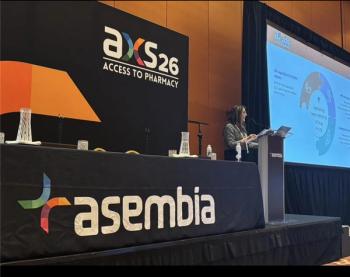
At Asembia AXS26, Dee Chaudhary broke down how shifting US drug pricing policy is tightening payer controls and changing pharmaceutical pricing and forecasting.

Avalere Health analysts map the converging pressures reshaping the drug pricing and distribution landscape ahead of November.

TailorMed broadens patient support beyond copay help, adding five modules that link access, affordability and adherence across specialty medications.
Charley Maxwell explains why Annex 21 is not just a regulatory hurdle, but a key commercial risk point.
In today’s Pharma Pulse, Walgreens reshapes pharmacist roles, pharmacies expand injectable access, GoodRx and Eli Lilly broaden GLP-1 access, radiopharma investment grows, and AbbVie signs a $745 million Haisco licensing deal.

Lilly's Foundayo and Zepbound KwikPen are now available on GoodRx for self-pay access.
In this week’s Pharma Pulse, tariffs reshape drug supply, a fragile ceasefire tests global pharma, Wegovy goes higher-dose, and patients still can't get appointments fast enough.

Manasi Salgaonkar examines how accurate class of trade research enables precise pricing, contract eligibility, and compliance.

Anthony Bianciella explains how rare disease brands lose patients because journey maps prioritize prescribing intent over the complex, unfamiliar logistics of post-diagnosis access.
Eli Lilly’s newest GLP-1, Foundayo (orforglipron), is the first FDA-approved weight loss pill that can be taken without food or water restrictions.

Amber Hussain-Siddique says operational discipline in inventory and logistics is the vital, yet overlooked, key to sustaining low-cost generic drug supplies in the U.S.

To fix America's drug shortages, pharma must look beyond manufacturing and overhaul how medicines are allocated and delivered to smaller hospitals.
In today's Pharma Pulse, the FDA flags misleading promotional claims from ImmunityBio regarding its cancer therapy and MedImpact launches new solutions to address the skyrocketing employer costs of GLP-1 weight management therapies.

New Benefit 360 and Direct Fund models aim to bridge the gap between clinical eligibility and employer-sponsored coverage.
In today's Pharma Pulse, the FDA grants expanded approval for Imcivree, while new research highlights how optimizing pharmacy technician roles can significantly boost vaccine access and uptake.

Kristine McGaughey, vice president of Implementation at ConnectiveRx, shares her insights on timing, strategy, and planning to ensure a smooth therapy launch.

Jordan Armstrong, VP of Business Development at AssistRX, explains how companies can tailor direct-to-patient strategies into their commercialization plans.

Brok Vandersteen, VP of Business Development, AssistRX, explains how policy pressures push life sciences companies toward direct-to-patient model adoption.

Jay Bregman, founder and CEO of Andel, discusses how employers are managing rising costs for prescription benefits and how pharma companies are shifting their distribution patterns.
In today’s Pharma Pulse, the FDA expands a key biologic approval for pediatric patients, and new research highlights the success of pharmacist-led testing in rural communities.
Advertisement
Advertisement
Trending on Pharmaceutical Commerce
1
How Rebate Timing Distorts a Pharmacy's 340B Books
2
EU Pharma Reform: Strategic Implications for US Drugmakers
3
White House Extends MFN Pricing to Every State Medicaid Program
4
Pharma Pulse: Behind the Scenes of LogiPharma USA 2026
5